Artisan Natural History & Dinosaur Replicas -
Owning Earth's Past
Dodos, Dinos & More -
Natural history Collector & Museum Services
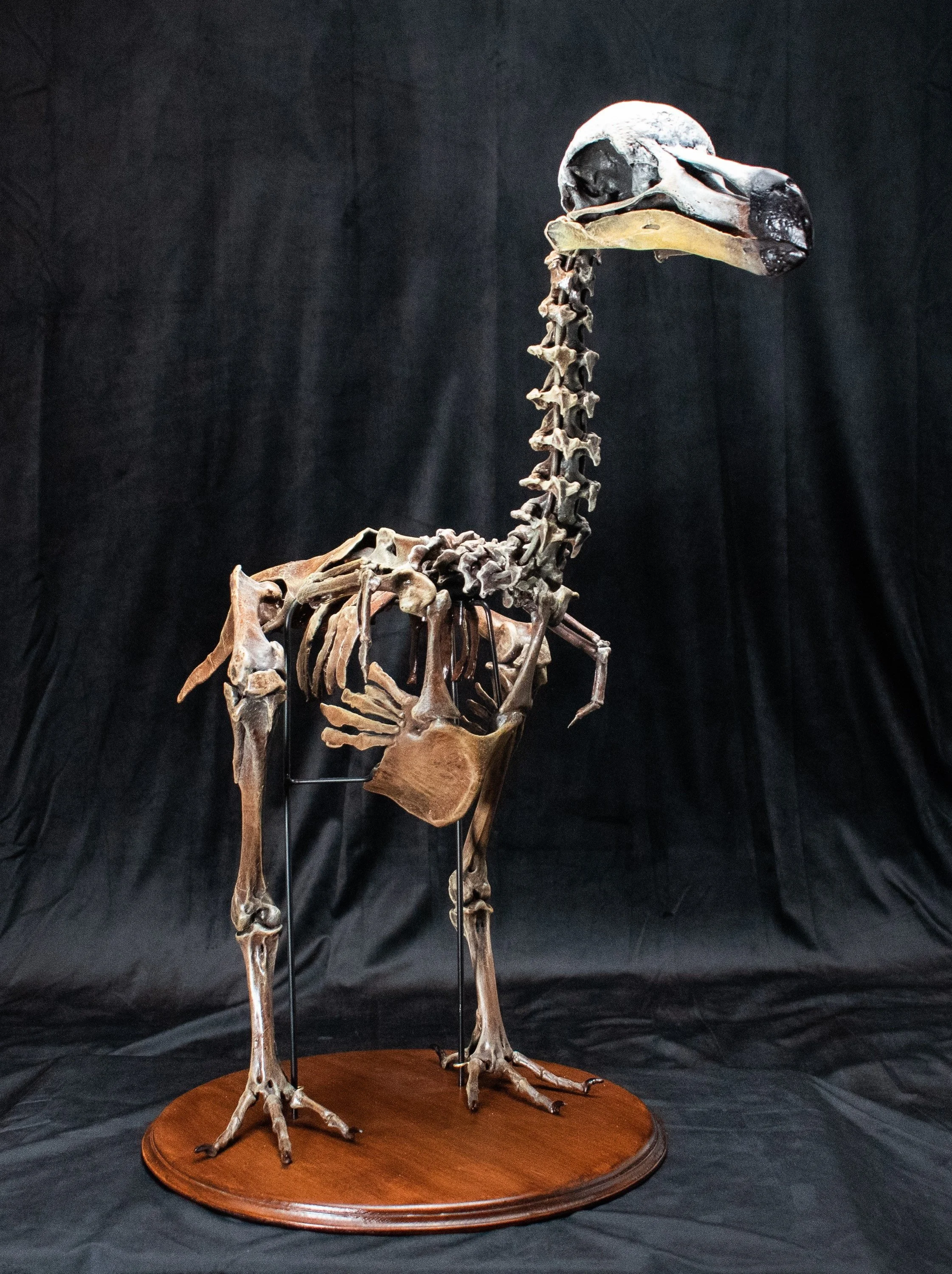
The Dodo … This unusual bird and it’s story have captivated me my hole life, since I was a little boy and I always wanted a skeleton for myself. I’m a maker of artisan science sculptures like dinosaur skulls or dodo bird skeletons.
Over the years a variety of private collectors and scientists and museums all over the world from Japan to the US, bought my Dodo replicas, like for example Ashley Hall from the museum of the Rockies in Montana got her Dodo sculpture from me (see my Instagram: PROARTCUT ).
Also the french Muséum de l’Ardèche - Fossiles et dinosaures in the beautiful town of Balazuc, is showing one of my Dodo sculptures in there exposition. Visit it! It’s wonderful with Kids, too: https://museum-ardeche.fr/
The one you will get after ordering is like the one in the photos, but because I build and paint them by hand, every one will be slightly different in detail.
It is a unique art piece, signed and dated under the base (of course with little felt pads). Made in and shipped from my studio in Germany with DHL Premium air shipping.
All real Dodo skeletons in museums and private collections today are composites made up from bones that belonged to several individual animals.
The only one dodo skeleton that is made up from the bones of a single animal was sold in 2016 for $430.000
The Dodo bird (lat.: Raphus Cucullatus) was a flightless bird and native to the island of Mauritius. The closest relatives to the dodo are pigeons and doves, but the dodo was much larger in size. The biggest found birds could be around 1m (36“ or 3 feet) tall and weighted about 18kg (2,857 stones or 40 lb). That was possible, because of the isolation of it’s habitat island without any natural predators, unfortunately that led also to their extinction. Humans ate the birds and brought rats and cats with them.
Known for their slightly comical appearance, a living bird was last seen on the island of Maritius in 1662, just 70 years after its discovery.
Dodos as a species are pretty significant and there bones are scattered across the globe in a number of museums, where people seek them out when they visit. But there is little known about how the bird really lived, how it moved, even the colour of its feathers are not really known anymore.
I worked for many years on this sculpture and had the privileged to have seen many museum pieces around the world. With the beginning of the pandemic in 2020, I began to collect all knowledge I could find, to build my own Dodo skeleton.
I used the newest scientific publications, 3d Scans and castings from real bones for my work, that took me years to find and get.
My Dodo is a combination of the old style we see in museums with the new knowledge we have today about posture and bone structure.
Also it’s around 100 bones, I made the artistic decision not to have a 100% perfect skeleton and so - like the one in the museems around the earth - some bones are missing, as a symbol of what humanity lost due to the extinction of this species.
Most dodo bones in museums are brown, because they are mostly sub-fossils found in the Mare aux Songes (a swamp on Mauritius) that gave them they’re color. Because of that, I gave my Dodo sculpture the some familiar old weathered look.
The head with the neck is removable for easy shipping (see photos).
The height is 77cm / 30”. The round wooden base with 39 cm / 15,75” diameter is made from European hardwood (FSC certified) and you can get it in three different color variants.
The possible colors are (please see photos attached):
1. aged walnut brown (what you can see in the pictures)
2. ebonized black
3. natural oiled beechwood
Your Dodo bird skeleton will be made by order with only the best materials and art paints available. It´s a long process with multiple coats of oils, varnish and real chellac, that takes it time.
It will be shipped worldwide in a big box with lots of packing material.
By the way, the electric drill, banana, apples, chairs and tables in some of the pictures are just for size comparison.
It’s a big bird, the hight of a dinner table.
For any questions, just write me here.
The Dodo … This unusual bird and it’s story have captivated me my hole life, since I was a little boy and I always wanted a skeleton for myself. I’m a maker of artisan science sculptures like dinosaur skulls or dodo bird skeletons.
Over the years a variety of private collectors and scientists and museums all over the world from Japan to the US, bought my Dodo replicas, like for example Ashley Hall from the museum of the Rockies in Montana got her Dodo sculpture from me (see my Instagram: PROARTCUT ).
Also the french Muséum de l’Ardèche - Fossiles et dinosaures in the beautiful town of Balazuc, is showing one of my Dodo sculptures in there exposition. Visit it! It’s wonderful with Kids, too: https://museum-ardeche.fr/
The one you will get after ordering is like the one in the photos, but because I build and paint them by hand, every one will be slightly different in detail.
It is a unique art piece, signed and dated under the base (of course with little felt pads). Made in and shipped from my studio in Germany with DHL Premium air shipping.
All real Dodo skeletons in museums and private collections today are composites made up from bones that belonged to several individual animals.
The only one dodo skeleton that is made up from the bones of a single animal was sold in 2016 for $430.000
The Dodo bird (lat.: Raphus Cucullatus) was a flightless bird and native to the island of Mauritius. The closest relatives to the dodo are pigeons and doves, but the dodo was much larger in size. The biggest found birds could be around 1m (36“ or 3 feet) tall and weighted about 18kg (2,857 stones or 40 lb). That was possible, because of the isolation of it’s habitat island without any natural predators, unfortunately that led also to their extinction. Humans ate the birds and brought rats and cats with them.
Known for their slightly comical appearance, a living bird was last seen on the island of Maritius in 1662, just 70 years after its discovery.
Dodos as a species are pretty significant and there bones are scattered across the globe in a number of museums, where people seek them out when they visit. But there is little known about how the bird really lived, how it moved, even the colour of its feathers are not really known anymore.
I worked for many years on this sculpture and had the privileged to have seen many museum pieces around the world. With the beginning of the pandemic in 2020, I began to collect all knowledge I could find, to build my own Dodo skeleton.
I used the newest scientific publications, 3d Scans and castings from real bones for my work, that took me years to find and get.
My Dodo is a combination of the old style we see in museums with the new knowledge we have today about posture and bone structure.
Also it’s around 100 bones, I made the artistic decision not to have a 100% perfect skeleton and so - like the one in the museems around the earth - some bones are missing, as a symbol of what humanity lost due to the extinction of this species.
Most dodo bones in museums are brown, because they are mostly sub-fossils found in the Mare aux Songes (a swamp on Mauritius) that gave them they’re color. Because of that, I gave my Dodo sculpture the some familiar old weathered look.
The head with the neck is removable for easy shipping (see photos).
The height is 77cm / 30”. The round wooden base with 39 cm / 15,75” diameter is made from European hardwood (FSC certified) and you can get it in three different color variants.
The possible colors are (please see photos attached):
1. aged walnut brown (what you can see in the pictures)
2. ebonized black
3. natural oiled beechwood
Your Dodo bird skeleton will be made by order with only the best materials and art paints available. It´s a long process with multiple coats of oils, varnish and real chellac, that takes it time.
It will be shipped worldwide in a big box with lots of packing material.
By the way, the electric drill, banana, apples, chairs and tables in some of the pictures are just for size comparison.
It’s a big bird, the hight of a dinner table.
For any questions, just write me here.
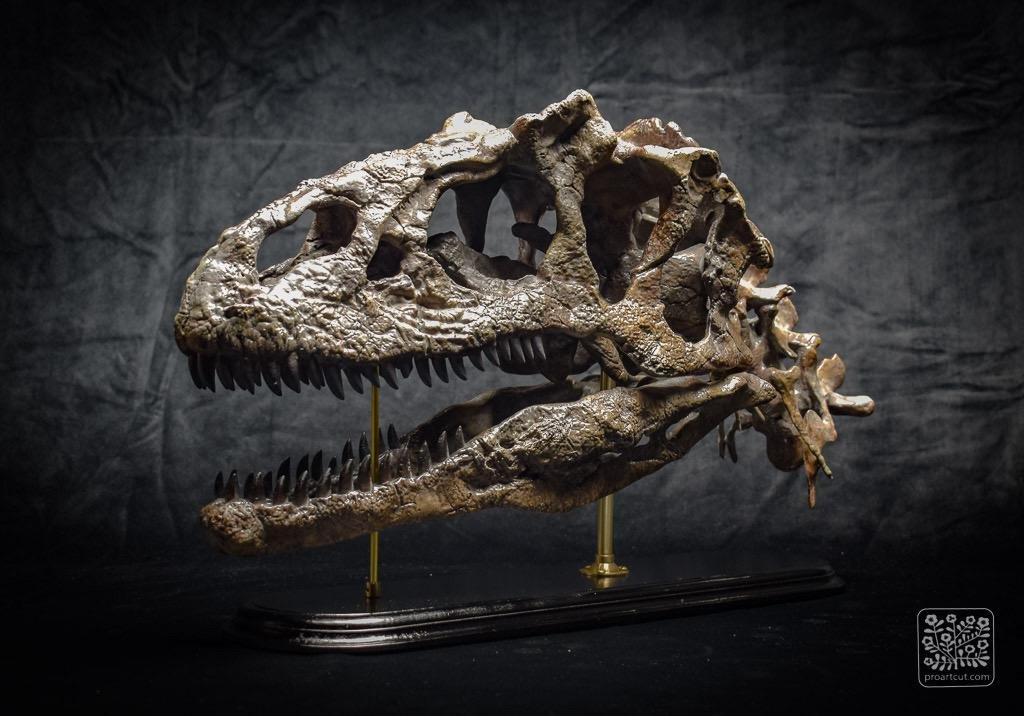
Every replica has a unique number and year handwritten under the base and is signed by the artist.
Discovery & History
The Allosaurus, whose name means “different lizard,” was one of the apex predators of the Late Jurassic Period—approximately 155 to 145 million years ago. It roamed what is now North America, preying on large herbivores like Stegosaurus and Diplodocus.
The first Allosaurus fossils were discovered in the Morrison Formation of Colorado in 1877, during the famous “Bone Wars” — a fierce rivalry between early American paleontologists. Since then, hundreds of specimens have been uncovered, helping scientists understand the life and behavior of this agile, intelligent carnivore.
This replica celebrates that incredible discovery, allowing you to own a piece of deep time — a reminder of the world long before humans walked the Earth.
Product Details
• Replica Type: skull and neck bones reproduction
• Material: High-quality resin (museum-grade detail)
• Base: Premium finished wooden stand
• Finish: Hand-painted and weathered for realistic fossil texture
Dimensions:
32 x 55 x 18cm (HLW) or
1 inch = 2.54 cm, so:
12.6 by 21.7 by 7.1 inches
Weight:
2,5kg or 5.51 lb or 88.2 oz or 0.39 stone
Each piece is individually finished, ensuring that no two replicas are exactly alike — almost like in real fossils.
Perfect For:
• Dinosaur lovers & fossil enthusiasts
• Educational collections or displays
• Unique home or office décor
• Thoughtful gifts for paleontology fans
etc.
Bring the prehistoric world to life with this dinosaur skull replica — a perfect blend of science, art, and history.
Color options for the skull:
You can have the skull in brown, black or ivory white, like seen in the pictures.
The colors of real fossils range from pitch black to snow white, dusty pink to pale yellow, light beige to dark red. About 90% of real fossils are red-brown because the fossils are formed by permineralization in iron-rich environments over thousands of years and under the pressure of sediments obove it, the bones become encased at the microscopic level in ferruginous minerals, giving them a dark, reddish-brown color. The sediments and groundwater in the immediate vicinity of the animal in which it was buried generally contain minerals of a range of colors. When the minerals of the surrounding material invade a buried bone and eventually overcoat—and in some cases replace—the original organic content, the now fossilized bone takes on the physical properties of those minerals, including color.
There are several possible ways to fossilization involving different types of minerals. It is the specific minerals that largely determine the final color of each fossil. Minerals around the world vary greatly in their physical properties: structure, hardness and luster.
In North America, many fossils contain phosphate, limestone, or iron. Phosphate typically produces black fossils and yellowish-gray fossils from limestone. However, many of them, particularly those of dinosaurs, are found in iron-rich areas, which generally produce the various shades of reddish-brown fossils seen in the museum.
All my sculptures, including this one, can be made in any fossil color for you at no extra charge. As you would like. I only use the best artists‘ colors and pigments and glaze in several thin layers to achieve a rich, realistic color spectrum. Many of my collectors tell me that the colors are unfortunately not shown correctly on the pictures and are much more brilliant in reality.
Your sculpture will look like in the picture but can be a little bit different in details, because you get a unique piece made just for you, numbered and signed under the base by the artist.
Like most of our replica, this unique dinosaur skull is also made by order.
We´re making parts for our replicas all the time and finishing it according to your specifications.
Any other questions? Just ask!
Best wishes!
Timo
Legal Notice – Design Protection:
This product is a registered design with the German Patent and Trademark Office (DPMA) and, where applicable, the European Union Intellectual Property Office (EUIPO). Counterfeiting, copying, or unauthorized commercial use (including modified imitations) violate:
- German Design Act (DesignG, §§ 38–51)
- EU Community Design Regulation (CDR, Art. 89–90)
- Unfair Competition Law (UWG, § 4)
Such infringements will result in civil claims for damages, injunctions, criminal prosecution and customs seizure within the EU.
Every replica has a unique number and year handwritten under the base and is signed by the artist.
Discovery & History
The Allosaurus, whose name means “different lizard,” was one of the apex predators of the Late Jurassic Period—approximately 155 to 145 million years ago. It roamed what is now North America, preying on large herbivores like Stegosaurus and Diplodocus.
The first Allosaurus fossils were discovered in the Morrison Formation of Colorado in 1877, during the famous “Bone Wars” — a fierce rivalry between early American paleontologists. Since then, hundreds of specimens have been uncovered, helping scientists understand the life and behavior of this agile, intelligent carnivore.
This replica celebrates that incredible discovery, allowing you to own a piece of deep time — a reminder of the world long before humans walked the Earth.
Product Details
• Replica Type: skull and neck bones reproduction
• Material: High-quality resin (museum-grade detail)
• Base: Premium finished wooden stand
• Finish: Hand-painted and weathered for realistic fossil texture
Dimensions:
32 x 55 x 18cm (HLW) or
1 inch = 2.54 cm, so:
12.6 by 21.7 by 7.1 inches
Weight:
2,5kg or 5.51 lb or 88.2 oz or 0.39 stone
Each piece is individually finished, ensuring that no two replicas are exactly alike — almost like in real fossils.
Perfect For:
• Dinosaur lovers & fossil enthusiasts
• Educational collections or displays
• Unique home or office décor
• Thoughtful gifts for paleontology fans
etc.
Bring the prehistoric world to life with this dinosaur skull replica — a perfect blend of science, art, and history.
Color options for the skull:
You can have the skull in brown, black or ivory white, like seen in the pictures.
The colors of real fossils range from pitch black to snow white, dusty pink to pale yellow, light beige to dark red. About 90% of real fossils are red-brown because the fossils are formed by permineralization in iron-rich environments over thousands of years and under the pressure of sediments obove it, the bones become encased at the microscopic level in ferruginous minerals, giving them a dark, reddish-brown color. The sediments and groundwater in the immediate vicinity of the animal in which it was buried generally contain minerals of a range of colors. When the minerals of the surrounding material invade a buried bone and eventually overcoat—and in some cases replace—the original organic content, the now fossilized bone takes on the physical properties of those minerals, including color.
There are several possible ways to fossilization involving different types of minerals. It is the specific minerals that largely determine the final color of each fossil. Minerals around the world vary greatly in their physical properties: structure, hardness and luster.
In North America, many fossils contain phosphate, limestone, or iron. Phosphate typically produces black fossils and yellowish-gray fossils from limestone. However, many of them, particularly those of dinosaurs, are found in iron-rich areas, which generally produce the various shades of reddish-brown fossils seen in the museum.
All my sculptures, including this one, can be made in any fossil color for you at no extra charge. As you would like. I only use the best artists‘ colors and pigments and glaze in several thin layers to achieve a rich, realistic color spectrum. Many of my collectors tell me that the colors are unfortunately not shown correctly on the pictures and are much more brilliant in reality.
Your sculpture will look like in the picture but can be a little bit different in details, because you get a unique piece made just for you, numbered and signed under the base by the artist.
Like most of our replica, this unique dinosaur skull is also made by order.
We´re making parts for our replicas all the time and finishing it according to your specifications.
Any other questions? Just ask!
Best wishes!
Timo
Legal Notice – Design Protection:
This product is a registered design with the German Patent and Trademark Office (DPMA) and, where applicable, the European Union Intellectual Property Office (EUIPO). Counterfeiting, copying, or unauthorized commercial use (including modified imitations) violate:
- German Design Act (DesignG, §§ 38–51)
- EU Community Design Regulation (CDR, Art. 89–90)
- Unfair Competition Law (UWG, § 4)
Such infringements will result in civil claims for damages, injunctions, criminal prosecution and customs seizure within the EU.
Bring a piece of prehistoric history into your home, office, or classroom with this museum-quality dinosaur skull replica model.
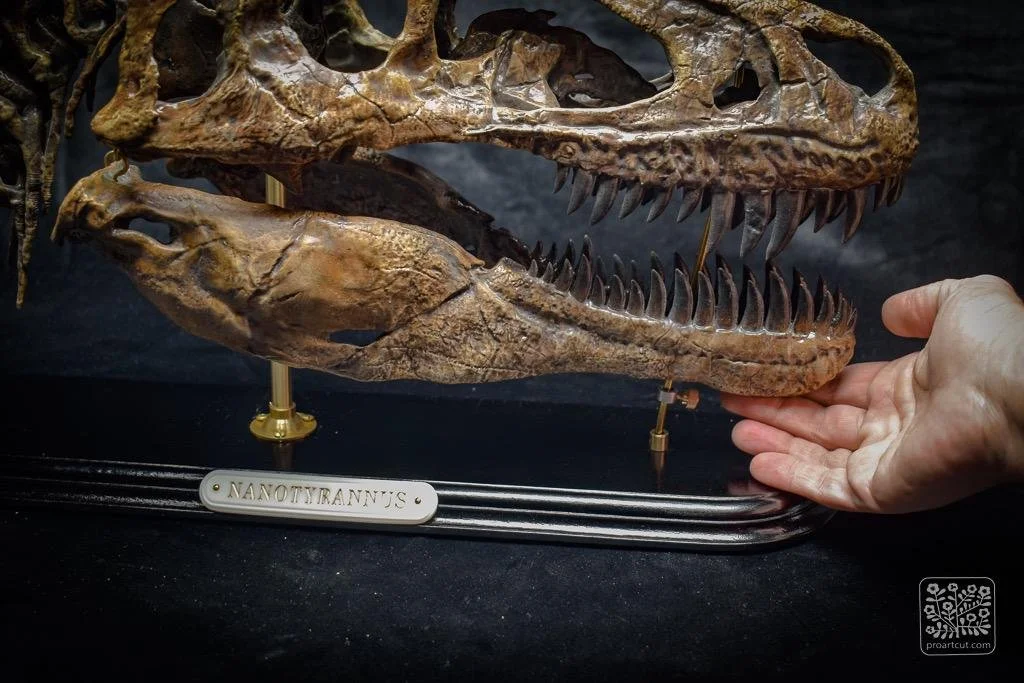
This T-Rex skull is an amalgamation of different real specimen from all over the world. A lot from the one that was auctioned off last year by Sotheby's for 6 million dollars, but also partly “Sue” and “Stan”. I also worked hard on getting the teeth serrations right with multiple scans of real T-Rex teeth.
The size of this sculpture is:
51x23x32cm (approx. 20” x 9” x 12.6”)
It's the same size of wooden baseplate I use for my Spinosaurus and the Parasaurolophus. That makes it a good size for most people to find a place in there homes for, but... it will be the head of my bigger sculpture, the full skeletons of a T-Rex and Triceratops, that isn't finished, yet.
So this head will fit also on the rest of it's hole skeleton. And if you buy the skull now, you get a refund, when buying the hole skeleton from me in the future.
The wooden base is made from European hardwood (FSC certified) and you can get it in three different color variants (please see photos attached).
The possible colors for the wooden base are:
1. aged walnut brown (what you can see in most pictures in my shop)
2. ebonized black
3. natural oiled beechwood
(please see photos attached).
Tyrannosaurus is a genus of large theropod dinosaur. The species Tyrannosaurus rex (rex meaning "king" in Latin) or T-Rex for its friends, is one of the best know and loved dinosaurs. It lived throughout what was then an island continent known as Laramidia. Fossils are found in a variety of rock formations dating to the Maastrichtian age of the Upper Cretaceous period, 68 to 66 million years ago. It was the last known member of the tyrannosaurids and among the last non-avian dinosaurs before the end of this age caused by a giant meteor.
And today we thing that Jurassic Park was wrong in its picture of the T-Rex. Because it most likely had a kind of feathers, according to new reconstructions that represent the most accurate models of the dinosaur to date.
The most complete specimen of T-Rex we found measures up to 12.3–12.4 m (40–41 ft) in length and maybe could have exceeded sizes of 12.4 m (41 ft) in length, 3.7–4 m (12–13 ft) in hip height, and 10 tonnes (9.8 long tons; 11 short tons) in mass. Although many other theropods likely rivaled Tyrannosaurus in size, it is still among the largest known land predators and is estimated to have exerted the strongest bite force among all terrestrial animals. The largest known skulls measure up to 1.54 meters (5 ft) in length, without the neck part.
That means that my skull sculpture would be around 2m long in reality.
That means with a length of 51cm (20“) that gives it a approx. scale of 1:4. That’s a size most people have a place in there homes for.
The skull itself is made from mixed media plastics and epoxy. Everything is hand painted with real brass parts on a German hardwood baseplate. Wirh real violin lacquer used in the finish. The lower jar is also adjustable by a brass thumb screw.
Like most of our replica, this unique skull is also made by order. We are making parts for our replicas all the time and finishing it according to your specifications.
For any questions, just write me here.
Best wishes
Timo
Legal Notice – Design Protection:
This product is a registered design with the German Patent and Trademark Office (DPMA) and, where applicable, the European Union Intellectual Property Office (EUIPO). Counterfeiting, copying, or unauthorized commercial use (including modified imitations) violate:
- German Design Act (DesignG, §§ 38–51)
- EU Community Design Regulation (CDR, Art. 89–90)
- Unfair Competition Law (UWG, § 4)
Such infringements will result in civil claims for damages, injunctions, criminal prosecution, and customs seizure within the EU.
Bring a piece of prehistoric history into your home, office, or classroom with this museum-quality dinosaur skull replica model.
This T-Rex skull is an amalgamation of different real specimen from all over the world. A lot from the one that was auctioned off last year by Sotheby's for 6 million dollars, but also partly “Sue” and “Stan”. I also worked hard on getting the teeth serrations right with multiple scans of real T-Rex teeth.
The size of this sculpture is:
51x23x32cm (approx. 20” x 9” x 12.6”)
It's the same size of wooden baseplate I use for my Spinosaurus and the Parasaurolophus. That makes it a good size for most people to find a place in there homes for, but... it will be the head of my bigger sculpture, the full skeletons of a T-Rex and Triceratops, that isn't finished, yet.
So this head will fit also on the rest of it's hole skeleton. And if you buy the skull now, you get a refund, when buying the hole skeleton from me in the future.
The wooden base is made from European hardwood (FSC certified) and you can get it in three different color variants (please see photos attached).
The possible colors for the wooden base are:
1. aged walnut brown (what you can see in most pictures in my shop)
2. ebonized black
3. natural oiled beechwood
(please see photos attached).
Tyrannosaurus is a genus of large theropod dinosaur. The species Tyrannosaurus rex (rex meaning "king" in Latin) or T-Rex for its friends, is one of the best know and loved dinosaurs. It lived throughout what was then an island continent known as Laramidia. Fossils are found in a variety of rock formations dating to the Maastrichtian age of the Upper Cretaceous period, 68 to 66 million years ago. It was the last known member of the tyrannosaurids and among the last non-avian dinosaurs before the end of this age caused by a giant meteor.
And today we thing that Jurassic Park was wrong in its picture of the T-Rex. Because it most likely had a kind of feathers, according to new reconstructions that represent the most accurate models of the dinosaur to date.
The most complete specimen of T-Rex we found measures up to 12.3–12.4 m (40–41 ft) in length and maybe could have exceeded sizes of 12.4 m (41 ft) in length, 3.7–4 m (12–13 ft) in hip height, and 10 tonnes (9.8 long tons; 11 short tons) in mass. Although many other theropods likely rivaled Tyrannosaurus in size, it is still among the largest known land predators and is estimated to have exerted the strongest bite force among all terrestrial animals. The largest known skulls measure up to 1.54 meters (5 ft) in length, without the neck part.
That means that my skull sculpture would be around 2m long in reality.
That means with a length of 51cm (20“) that gives it a approx. scale of 1:4. That’s a size most people have a place in there homes for.
The skull itself is made from mixed media plastics and epoxy. Everything is hand painted with real brass parts on a German hardwood baseplate. Wirh real violin lacquer used in the finish. The lower jar is also adjustable by a brass thumb screw.
Like most of our replica, this unique skull is also made by order. We are making parts for our replicas all the time and finishing it according to your specifications.
For any questions, just write me here.
Best wishes
Timo
Legal Notice – Design Protection:
This product is a registered design with the German Patent and Trademark Office (DPMA) and, where applicable, the European Union Intellectual Property Office (EUIPO). Counterfeiting, copying, or unauthorized commercial use (including modified imitations) violate:
- German Design Act (DesignG, §§ 38–51)
- EU Community Design Regulation (CDR, Art. 89–90)
- Unfair Competition Law (UWG, § 4)
Such infringements will result in civil claims for damages, injunctions, criminal prosecution, and customs seizure within the EU.
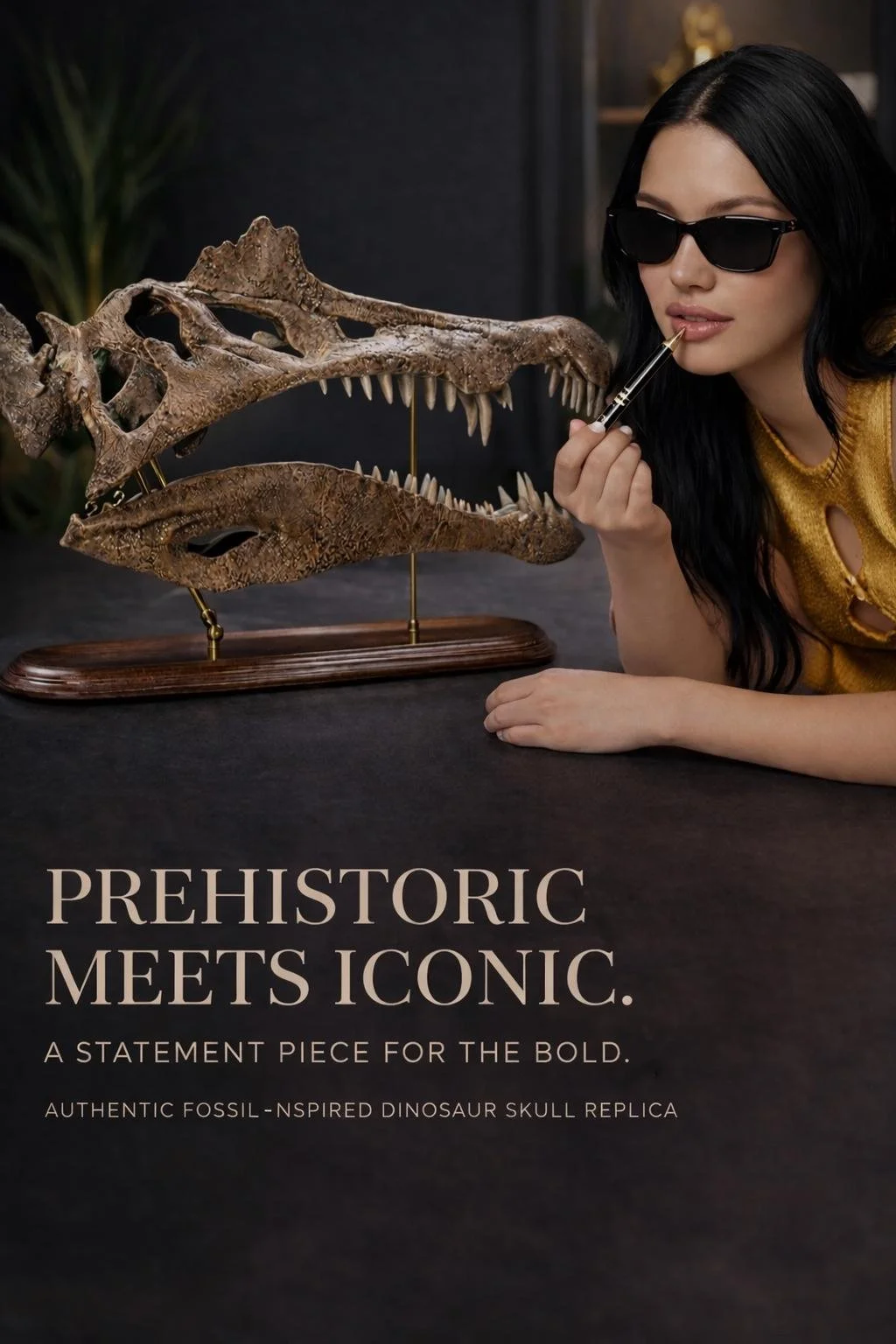
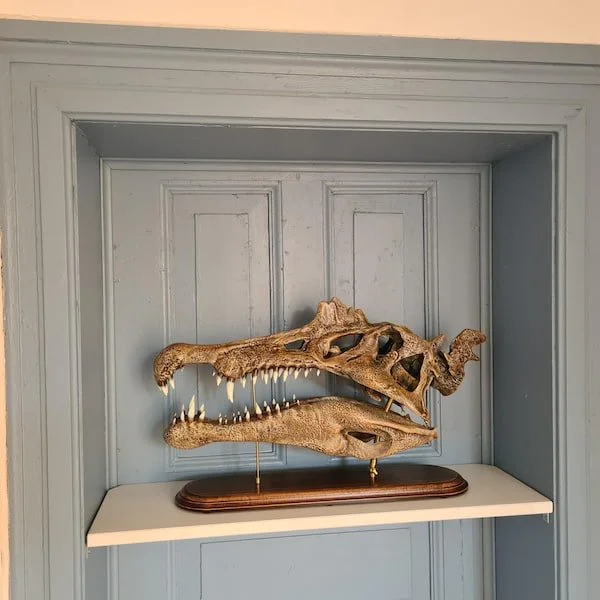
Bring a piece of prehistoric history into your home, office, or classroom with this museum-quality Spinosaurus skull replica model.
Spinosaurus was a true prehistoric giant, the With a length of 18 meters and a weight of nine tons and an imposing back sail he easily outshined even T-Rex.
This Spinosaurus skull replica is like the one Ernst Stromer discovered 1915 in Egypt, but smaller of course. It comes with a real wooden base with brass pipes and rods in a victorian style. The lower jaw is movable and adjustable with a screw.
Length: 56cm / 22“
Height: approx. 30cm / 12“
Width: 15cm / 6”
Color options:
You can have it in brown, like seen on the picture or in black.
The colors of real fossils range from pitch black to snow white, dusty pink to pale yellow, light beige to dark red. About 90% of real fossils are red-brown because the fossils are formed by permineralization in iron-rich environments over thousands of years and under the pressure of sediments obove it, the bones become encased at the microscopic level in ferruginous minerals, giving them a dark, reddish-brown color. The sediments and groundwater in the immediate vicinity of the animal in which it was buried generally contain minerals of a range of colors. When the minerals of the surrounding material invade a buried bone and eventually overcoat—and in some cases replace—the original organic content, the now fossilized bone takes on the physical properties of those minerals, including color.
There are several possible ways to fossilization involving different types of minerals. It is the specific minerals that largely determine the final color of each fossil. Minerals around the world vary greatly in their physical properties: structure, hardness and luster.
In North America, many fossils contain phosphate, limestone, or iron. Phosphate typically produces black fossils and yellowish-gray fossils from limestone. However, many of them, particularly those of dinosaurs, are found in iron-rich areas, which generally produce the various shades of reddish-brown fossils seen in the museum.
All my sculptures, including the Velociraptor skull, can be made in any fossil color for you at no extra charge. As you would like. I only use the best artists‘ colors and pigments and glaze in several thin layers to achieve a rich, realistic color spectrum. Many of my collectors tell me that the colors are unfortunately not shown correctly on the pictures and are much more brilliant in reality.
Your sculpture will look like in the picture but can be a little bit different in details, because you get a unique piece made just for you, numbered and signed under the base by myself.
Like most of our replica, this unique spinosaurus skull is also made by order.
We are making parts for our replicas all the time and finishing it according to your specifications.
Legal Notice – Design Protection:
This product is a registered design with the German Patent and Trademark Office (DPMA) and, where applicable, the European Union Intellectual Property Office (EUIPO). Counterfeiting, copying, or unauthorized commercial use (including modified imitations) violate:
- German Design Act (DesignG, §§ 38–51)
- EU Community Design Regulation (CDR, Art. 89–90)
- Unfair Competition Law (UWG, § 4)
Such infringements will result in civil claims for damages, injunctions, criminal prosecution and customs seizure within the EU.
Bring a piece of prehistoric history into your home, office, or classroom with this museum-quality Spinosaurus skull replica model.
Spinosaurus was a true prehistoric giant, the With a length of 18 meters and a weight of nine tons and an imposing back sail he easily outshined even T-Rex.
This Spinosaurus skull replica is like the one Ernst Stromer discovered 1915 in Egypt, but smaller of course. It comes with a real wooden base with brass pipes and rods in a victorian style. The lower jaw is movable and adjustable with a screw.
Length: 56cm / 22“
Height: approx. 30cm / 12“
Width: 15cm / 6”
Color options:
You can have it in brown, like seen on the picture or in black.
The colors of real fossils range from pitch black to snow white, dusty pink to pale yellow, light beige to dark red. About 90% of real fossils are red-brown because the fossils are formed by permineralization in iron-rich environments over thousands of years and under the pressure of sediments obove it, the bones become encased at the microscopic level in ferruginous minerals, giving them a dark, reddish-brown color. The sediments and groundwater in the immediate vicinity of the animal in which it was buried generally contain minerals of a range of colors. When the minerals of the surrounding material invade a buried bone and eventually overcoat—and in some cases replace—the original organic content, the now fossilized bone takes on the physical properties of those minerals, including color.
There are several possible ways to fossilization involving different types of minerals. It is the specific minerals that largely determine the final color of each fossil. Minerals around the world vary greatly in their physical properties: structure, hardness and luster.
In North America, many fossils contain phosphate, limestone, or iron. Phosphate typically produces black fossils and yellowish-gray fossils from limestone. However, many of them, particularly those of dinosaurs, are found in iron-rich areas, which generally produce the various shades of reddish-brown fossils seen in the museum.
All my sculptures, including the Velociraptor skull, can be made in any fossil color for you at no extra charge. As you would like. I only use the best artists‘ colors and pigments and glaze in several thin layers to achieve a rich, realistic color spectrum. Many of my collectors tell me that the colors are unfortunately not shown correctly on the pictures and are much more brilliant in reality.
Your sculpture will look like in the picture but can be a little bit different in details, because you get a unique piece made just for you, numbered and signed under the base by myself.
Like most of our replica, this unique spinosaurus skull is also made by order.
We are making parts for our replicas all the time and finishing it according to your specifications.
Legal Notice – Design Protection:
This product is a registered design with the German Patent and Trademark Office (DPMA) and, where applicable, the European Union Intellectual Property Office (EUIPO). Counterfeiting, copying, or unauthorized commercial use (including modified imitations) violate:
- German Design Act (DesignG, §§ 38–51)
- EU Community Design Regulation (CDR, Art. 89–90)
- Unfair Competition Law (UWG, § 4)
Such infringements will result in civil claims for damages, injunctions, criminal prosecution and customs seizure within the EU.
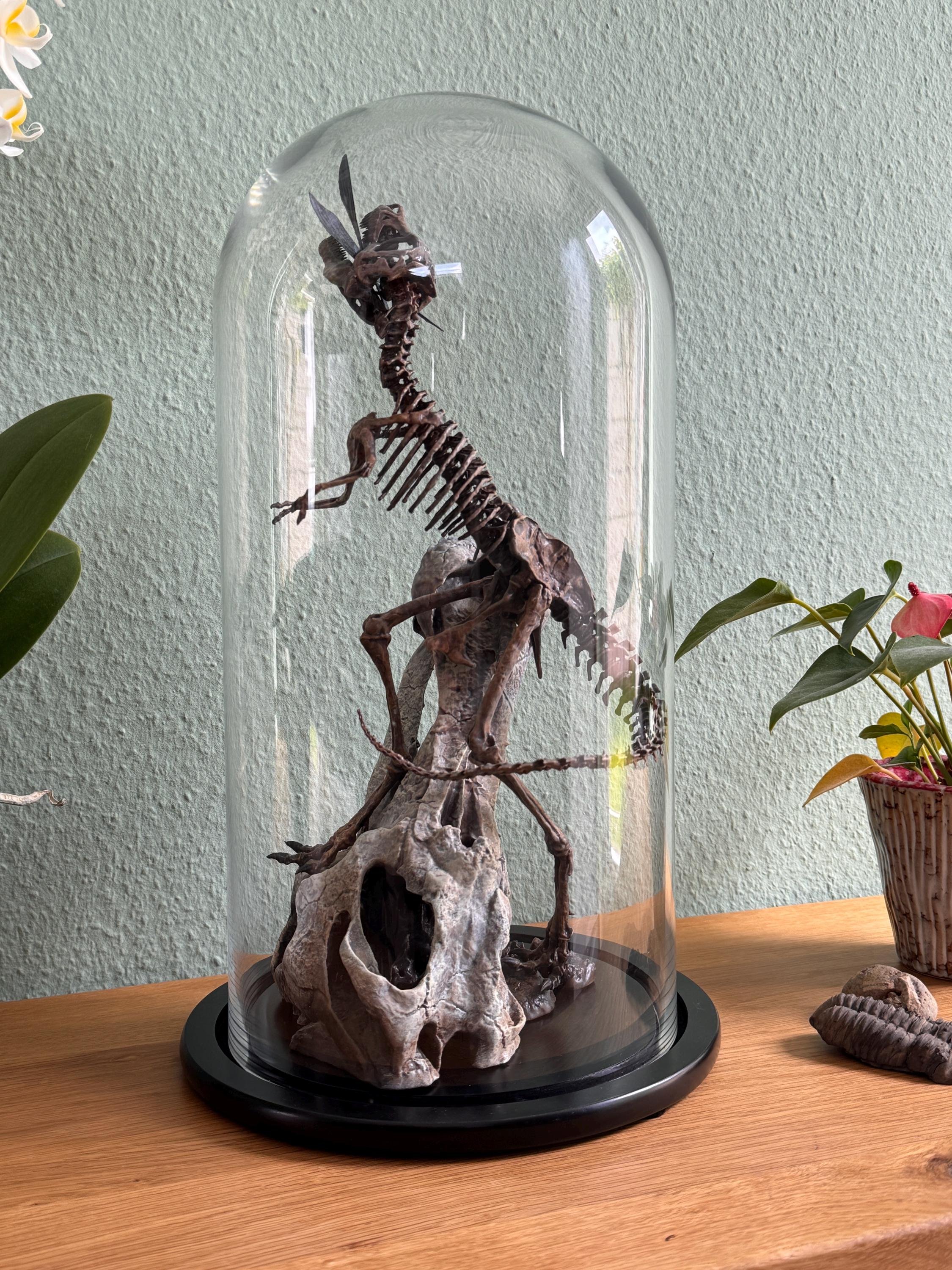
3D-Scan & Replica Service - Paleontology Through Expert Research and Innovation
We are a family-owned company with over 20 years of experience in 3D scanning and printing for industrial product development and design. For several years we have applied that expertise to the museum, research and collector markets. We deliver complete solutions that enhance understanding of prehistoric life: combining advanced technologies and industry know‑how to help academic institutions, museums and conservation organizations uncover, reproduce and preserve fossil material with precision and scientific rigour.
We deploy industrial‑grade 3D scanning and 3D printing equipment to deliver precise, high‑resolution digital records and faithful replicas for collectors and museums. Using structured‑light and laser scanners, we capture microscopic surface detail and accurate geometry across objects of any size or material—fossils, bones, artifacts, textiles, mounted specimens—producing full‑colour models with resolution from millimetres to microns for archival documentation, morphometrics and virtual exhibits.
Digital assets are quality‑controlled (noise reduction, mesh optimization, metadata enrichment) to ensure long‑term usability and compatibility with museum databases, CAD and 3D printing. For physical replicas, we convert scans into museum‑grade reproductions with materials and finishes for safe handling, education and travelling exhibits, while preserving provenance. Services include on‑site capture, secure data management and tailored deliverables - so curators, conservators and researchers can access, study and share collections with confidence. Just put your project in writing here and we will contact you.
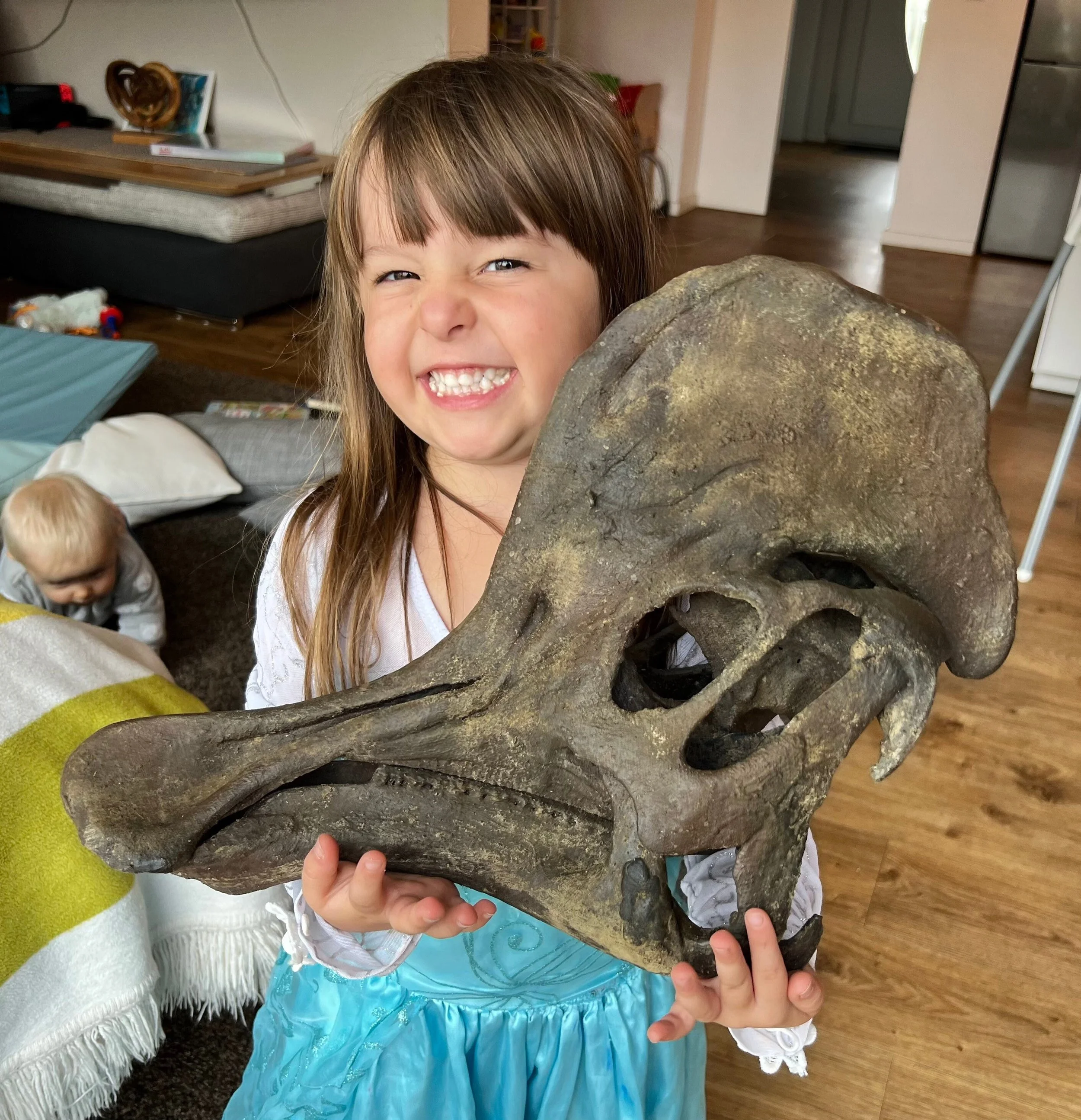
Some happy Costumers